Choosing between BBQ and shisha coconut charcoal isn’t always straightforward—especially when your business depends on consistent heat, clean burning, and reliable supply. Whether you’re a distributor, importer, restaurant owner, shisha lounge operator, or BBQ fuel supplier, understanding the real difference between these two types can protect you from quality issues, customer complaints, and expensive shipping mistakes.
In this guide, we break down all key aspects of coconut shell charcoal specifications for BBQ and shisha, including burn time, ash content, volatile matter, shape, density, certifications, packaging formats, and ideal use cases. Many buyers think they can import one type and sell it for both purposes, but that often leads to poor performance—especially because shisha charcoal requires stricter quality levels than BBQ charcoal.
- By the end of this guide, you’ll know exactly:
- Which charcoal type fits your business model
- What specifications matter most for your customers
- How to avoid counterfeit or low-quality products
- Which production standards manufacturers follow
- What to ask before placing your first order
If you plan to import coconut charcoal at scale, this guide will help you make the right choice—backed by real-world insight from Indonesia’s top charcoal manufacturing hubs.
Understanding the Two Types of Coconut Charcoal
When importing charcoal, most new buyers assume BBQ and shisha coconut charcoal are interchangeable. In reality, they are made for completely different user behaviors. Shisha charcoal requires slow burning and zero smell, while BBQ charcoal is optimized for higher heat and longer outdoor cooking.
What Makes Coconut Shell an Ideal Raw Material?
Coconut shells naturally contain high lignin and low cellulose. This makes them burn hotter, cleaner, and longer than traditional wood charcoal. For businesses, this means:
- Lower ash
- Better heat efficiency
- Longer burn duration
- More consistent product quality
BBQ charcoal is focused on heat output, while shisha charcoal prioritizes purity and smoke-free performance. This difference shapes the entire production process—from shaping to drying to packaging.
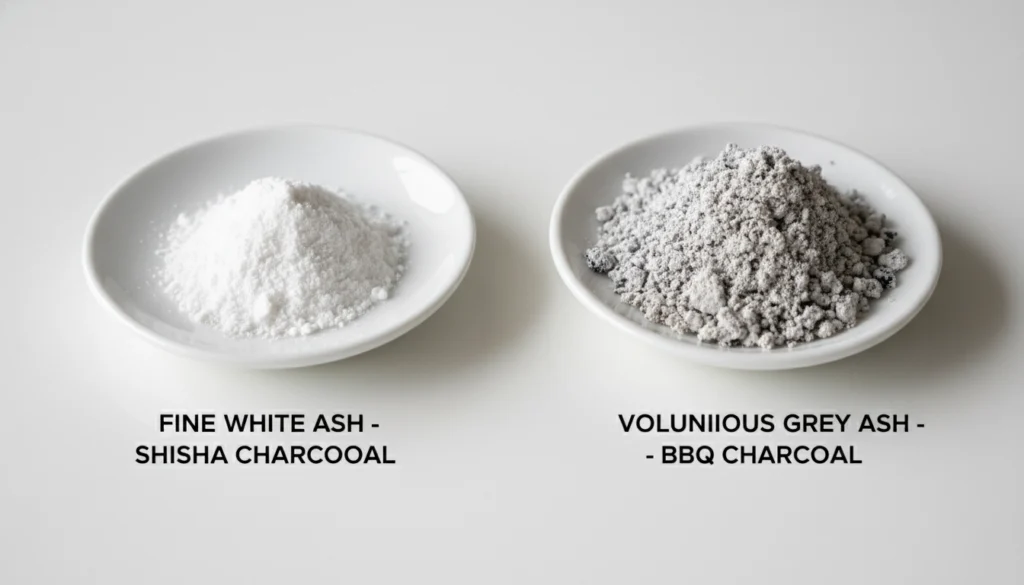
Ash residue comparison for both charcoal types
BBQ Coconut Charcoal Specifications Explained
BBQ charcoal needs to provide high heat for grilling meat, seafood, and vegetables. It is typically larger in shape and does not require ultra-low moisture or ultra-low ash like shisha charcoal.
Common Shapes for BBQ Use
- Hexagonal 2.2 cm, 2.5 cm, or 3 cm
- Logs / sticks
- Pillow briquettes
- Sawdust–coconut hybrid briquettes
- Finger briquettes
These shapes give more airflow and strong heat.
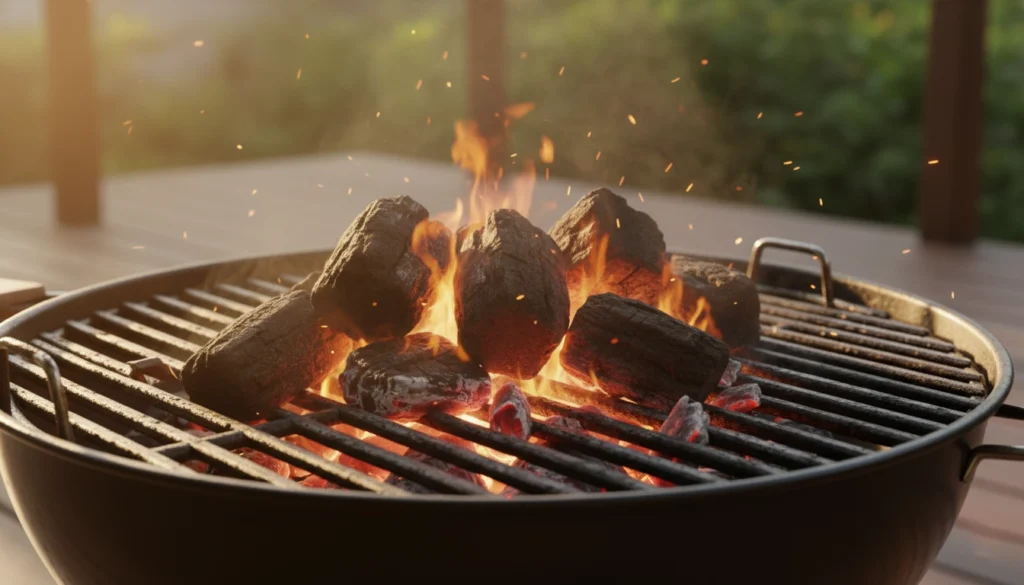
BBQ coconut charcoal briquettes burning on a grill
Burn Time, Heat Output & Ash Behavior
A good BBQ charcoal must:
- Burn 2–4 hours depending on shape
- Produce strong stable heat
- Maintain structure without cracking
- Produce <10% ash
Most restaurants prefer Indonesian coconut BBQ charcoal because it burns cleaner and hotter than mangrove or hardwood briquettes.
Shisha Coconut Charcoal Specifications Explained
Shisha charcoal is held to a higher standard because it must burn cleanly near the user’s face. Any smell, spark, or smoke ruins the experience.
Cube Sizes, Density & Odor Requirements
Most common shapes:
- 22 mm cubes
- 25 mm cubes
- 26 mm cubes
- Flats (25×25×17)
- Hexagonal 2 cm
Shisha charcoal must meet extremely strict specs:
- Fixed carbon: 75–85%
- Ash content: 1.5–2.5%
- Moisture: <6%
- Volatile matter: <14%
- No smell, no spark, no smoke
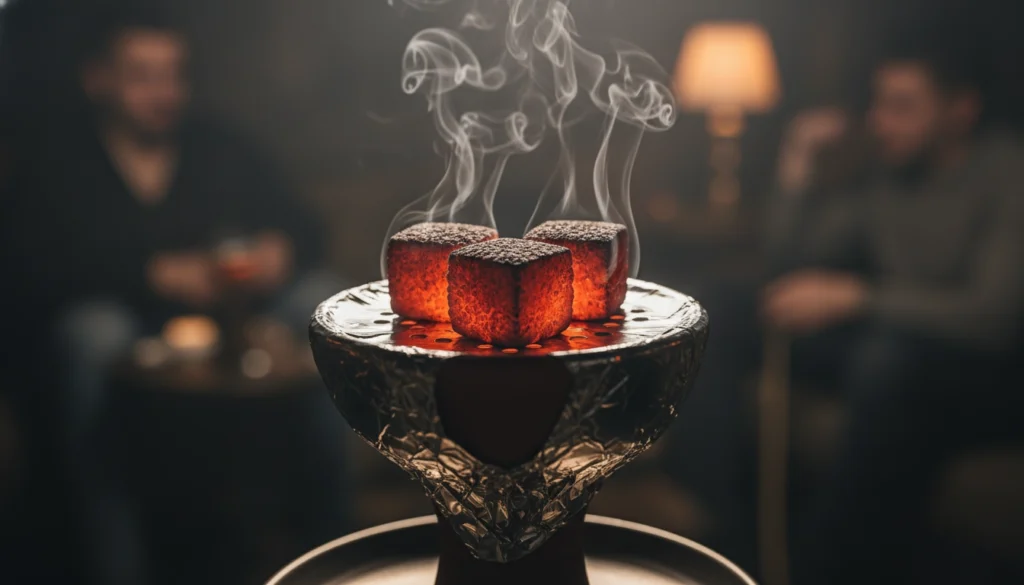
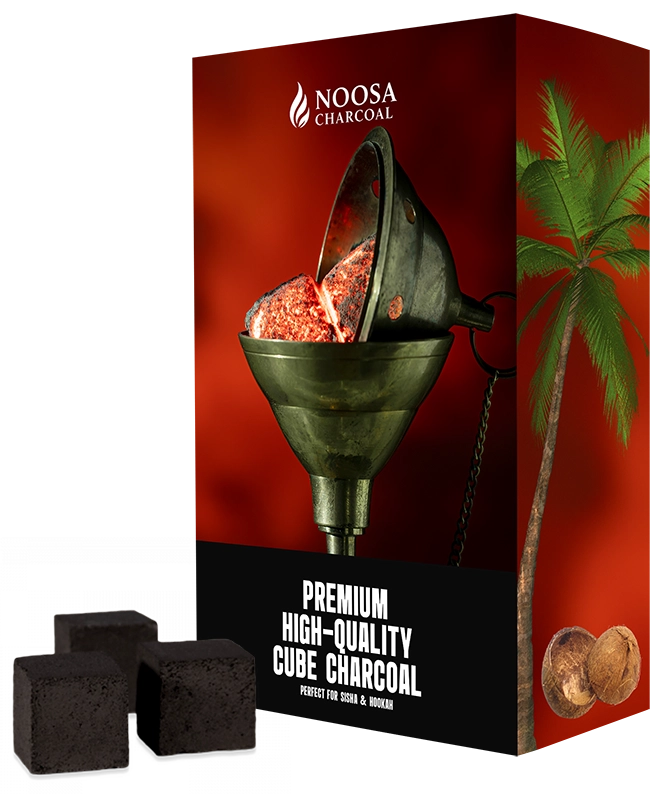
Shisha charcoal cubes on a hookah bowl
Why Shisha Charcoal Needs Stricter Standards
The cube must burn for 60–90 minutes while producing:
- Zero chemical odor
- Very low ash (fine, white ash)
- High density to avoid cracks
- Consistent edges
- No popping or sparks
Detailed Comparison Table
| Feature | BBQ Charcoal | Shisha Charcoal |
|---|---|---|
| Ash Content | 5–10% | 1.5–2.5% |
| Moisture | Up to 8% | <6% |
| Burn Time | 2–4 hours | 60–90 mins |
| Odor | Mild OK | Must be odorless |
| Shape | Logs, hex, pillow | Cubes, flats |
| Density | Medium | High |
| Standards | Flexible | Very strict |
| Price | Lower | Higher |
| User | Restaurants, BBQ | Hookah lounges |
Which Type Should You Import?
For Retailers & Distributors
If your customers are BBQ enthusiasts, restaurants, or grill brands, choose BBQ charcoal. It’s cheaper, easier to ship, and has fewer quality complaints.
For Shisha Lounges & Hookah Brands
If you supply shisha lounges, cafes, clubs, or Arab/Gulf markets, always choose premium shisha charcoal. Low-quality shisha cubes will ruin your brand reputation instantly.
Manufacturing Differences That Affect Quality
The two products use different:
- Binder ratios
- Carbonization temperatures
- Pressing pressures
- Drying methods
- Packaging materials
Shisha charcoal undergoes more careful screening, longer drying, and stricter quality checks.
Pricing & MOQ Differences
Shisha charcoal costs more due to:
- Higher density
- More quality control
- Longer pressing times
- Stricter ash and moisture requirements
Typical factory pricing ranges:
- BBQ: $350–$550/ton
- Shisha: $750–$1,200/ton
MOQs are usually:
- 18 tons (1×40ft HQ) for BBQ
- 20–23 tons for shisha
How to Test Quality Before Ordering
Here are essential tests:
- Drop test (check density)
- Burn test (odor, smoke, ash)
- Caliper test (measure uniformity)
- COA review (fixed carbon, ash, moisture)
- Packaging drop test
Importers should always test at least 1 kg sample from each batch.
Final Recommendation
If your business needs high heat and flexibility, go with BBQ coconut charcoal. If your customers demand clean, odorless, long-burning cubes, choose shisha charcoal.
For importers who need consistent supply, competitive pricing, and stable production capacity, Indonesia remains the number one source worldwide.