Hardwood charcoal remains a top choice for BBQ chefs, grill restaurants, metal forges, and charcoal retailers. But did you know there are distinct types — each suited for different purposes? Understanding the differences between lump hardwood charcoal, briquettes, and premium-cut charcoal empowers you to choose the best option for your needs, whether it’s high heat for grilling, consistent burn for industrial use, or premium presentation for retail.
This guide dives into each type: how they are made, their characteristics, advantages and drawbacks, and what you should consider when buying or selling. By knowing these differences, you can align your purchase with your business requirements—from retail store to restaurant or manufacturing facility.
We’ll also include a comparison table and a practical buyer’s checklist. Whether you’re sourcing in bulk or choosing charcoal for your own use — this article will help you make a wiser, more profitable choice.
Understanding Hardwood Charcoal — Basics & Why It Matters
Hardwood charcoal is a carbonized product of hardwood logs — such as oak, hickory, beech, acacia, or other dense woods — burned in a low-oxygen environment. Because hardwood tends to be dense and rich in fixed carbon, the resulting charcoal often burns hotter, cleaner, and longer than lighter wood.
For businesses — restaurants, grill shops, forges, or retailers — the type of charcoal you choose impacts fuel efficiency, burn behavior, ash residue, customer experience, and overall value. Different forms of charcoal (lump, briquette, premium-cut) address different needs. Understanding them helps you avoid mismatched inventory or customer complaints.
Lump Hardwood Charcoal
Lump charcoal is produced from pieces of hardwood logs. The wood is cut or split into chunks or lumps, then carbonized in kilns under low oxygen. Once carbonized, the lumps retain the irregular shapes of the original wood pieces. The result is a natural, unprocessed charcoal — often considered “pure charcoal.”
Because lump charcoal uses direct hardwood, it doesn’t include additives or binders. Its irregular shape and variable size come from natural wood grain and cutting method.
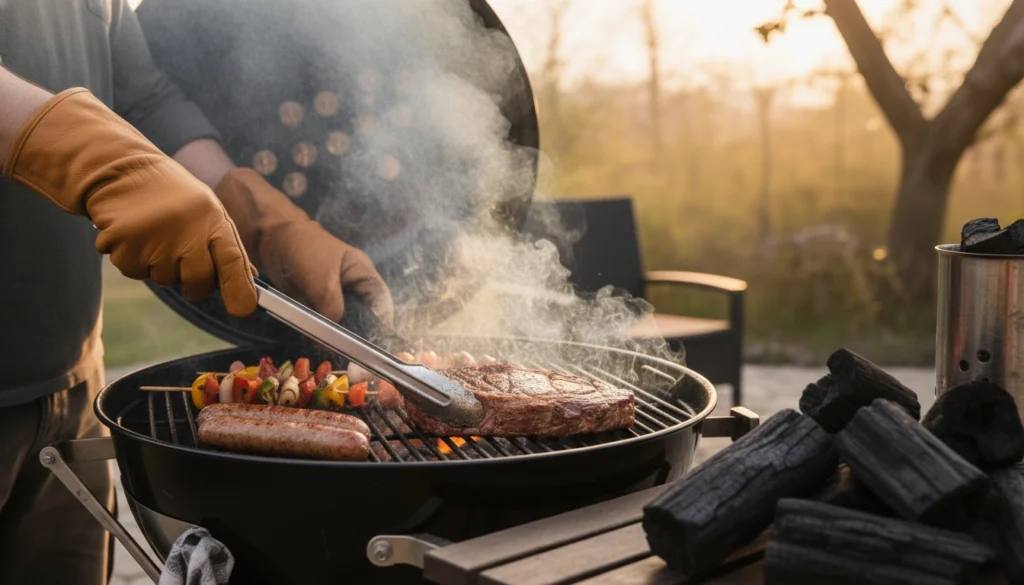
Lump Hardwood Charcoal BBQ
Pros and cons of lump charcoal
Pros:
- Burns hot and fast — ideal for searing or quick grilling
- Ignites quickly
- Natural wood aroma and flavor (important for meat or barbeque cooking)
- No additives or bonding materials
Cons:
- Burn time can be uneven due to varying chunk sizes
- Ash may be unpredictable — smaller pieces may create more ash or burn faster
- Less uniform — not ideal when consistent, predictable burn is needed
- Storage and handling can be more cumbersome
Typical uses & buyer profile
Lump charcoal suits:
- Restaurants or kitchens needing quick high heat (e.g. searing steak)
- BBQ enthusiasts who value wood aroma and fast grilling
- Small-scale artisans or home users who prefer natural charcoal
- Buyers who want additive-free, minimal-processing product
Businesses that value flavor, quick ignition, and shorter grilling cycles often prefer lump hardwood charcoal.
Hardwood Briquette Charcoal
Briquette charcoal is made by compressing charcoal powder (from hardwood or other charcoal) — often mixed with binders such as starch or other organic binders — under high pressure into uniform shapes. Some briquettes incorporate mineral coal dust or other fillers to improve ignition or shape retention.
This process converts sawdust, leftover wood, or shredded hardwood charcoal into a compact, uniform fuel block. Because briquettes are processed, they tend to have stable size, shape, and predictable burn behavior.
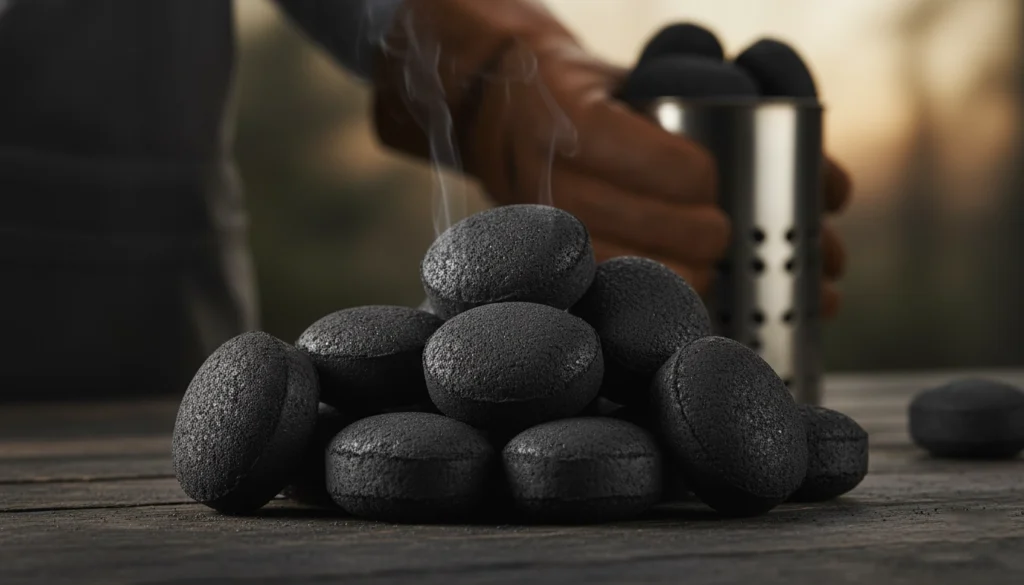
Hardwood Briquette Charcoal
Pros and cons of briquettes
Pros:
- Highly uniform size and shape — easy stacking, packaging, transport
- Predictable burn time and heat output
- Easier to store and handle compared to irregular lumps
- Often more economical per volume or weight
Cons:
- May contain binders or fillers (which affect ash, smell, and combustion quality)
- May burn slower or produce ash residue depending on composition
- Less “natural flavor” — less wood aroma when burning (important for grilling flavor)
- Possible impurities if cheap fillers or wood dust used
Typical uses & buyer profile
Briquette charcoal suits:
- Commercial kitchens needing consistent fuel for repeatable cooking
- Retail charcoal suppliers targeting mass markets
- Industrial processes requiring uniform fuel blocks
- Buyers prioritizing economy, storage convenience, or large-volume purchases
For buyers needing standardized, stackable and consistent fuel, briquettes often deliver better value.
Premium Cut Hardwood Charcoal (Specialty Cuts / High-Grade Lump / Graded Pieces)
“Premium cut” refers to high-grade hardwood charcoal pieces that are hand-selected or machine-sorted for uniform size, density, and appearance. These may be large chunks of hardwood charcoal with minimal cracks, consistent density, low moisture, and low ash. This category often excludes small fragments or powder, focusing on the best-performing lumps.
Some producers offer “graded lump charcoal,” where pieces above a certain size and density are separated and sold as premium cut. Others may kiln-dry and sort charcoal specifically for export or high-end grilling markets.
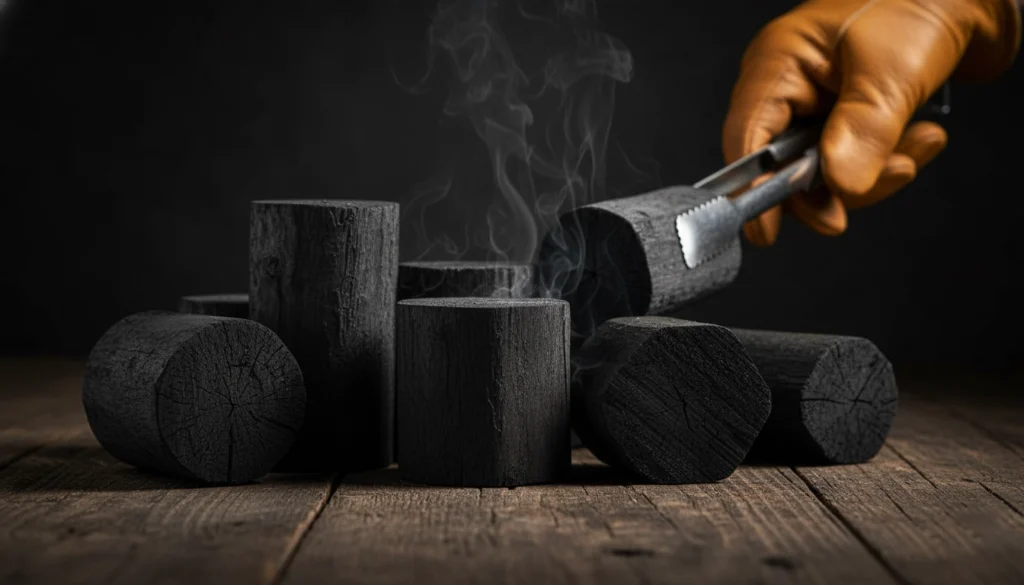
Premium Cut Hardwood Charcoal
Benefits and when to buy premium-cut
- High heat retention and long burn time — because only large, dense chunks are selected
- More consistent performance — less fragmentation or “popcorn” when burning
- Better presentation — ideal for retail stores, restaurants wanting premium image
- Reduced ash and impurities — due to careful sorting and cleaning
Premium-cut target users
Premium-cut charcoal is ideal for:
- Upscale restaurants and BBQ venues
- Retail consumers seeking “top-tier” charcoal
- Specialty grilling or smoking markets (e.g. gourmet meat, premium seafood)
- Export clients demanding quality and consistency
For businesses that want to charge premium prices or build strong brand perception, premium-cut hardwood charcoal offers a competitive edge.
Comparison Table — Lump vs Briquette vs Premium-Cut Charcoal
| Feature / Attribute | Lump Charcoal | Briquette Charcoal | Premium-Cut Charcoal |
|---|---|---|---|
| Origin | Whole hardwood chunks | Compressed charcoal/binder mix | High-grade hardwood chunks / sorted lumps |
| Shape & Size | Irregular chunks | Uniform bricks/blocks | Uniform large-size chunks |
| Burn Behavior | Hot, fast, variable | Predictable, steady | Long, stable, high heat |
| Ignition Speed | Quick | Moderate (with starter) | Moderate to quick |
| Heat Output | High (short burst) | Moderate to high, steady | High (sustained) |
| Ash Production | Varies; moderate | Depends on binder/filler | Low to moderate (clean lumps) |
| Aroma/Flavor (food use) | Natural wood aroma | Clean but less wood flavor | Premium wood flavor + clean burn |
| Storage & Handling | Bulk, irregular | Easy stacking & packaging | Bulk but sorted & cleaner |
| Best Use Cases | Quick grilling, searing | Restaurants, mass market, industry | Premium BBQ, gourmet cooking, retail |
| Price Range (for business) | Mid | Low–mid | Mid–higher |
How to Choose Which Hardwood Charcoal Type Fits Your Business Needs
Choosing the right charcoal type depends on what you need:
- If you need quick, high heat for searing or short cooking cycles: choose lump charcoal.
- If you run a restaurant or supply charcoal to customers needing consistency and easy storage: choose briquette charcoal.
- If you aim for premium customers — fine dining, gourmet BBQ, or retail clients demanding the best: choose premium-cut hardwood charcoal.
Also consider your storage space, packaging, shipping costs, and customer expectations. Uniform briquettes save space and simplify logistics. Premium lumps sell for higher margins but may cost more to sort and pack.
Quality Indicators & What to Inspect Before Buying
Whether lump, briquette, or premium-cut — always inspect quality before purchasing:
- Wood origin: true hardwood, not softwood or mixed materials. Density matters.
- Burn consistency: charcoal should burn steadily, with minimal smoke or sparks.
- Ash residue: lighter ash is better; dark or heavy ash indicates impurities or fillers.
- Moisture level: charcoal should be dry. Damp charcoal is harder to ignite and stores poorly.
- Uniformity (for briquettes & premium): consistent size, no cracks, no powder mix.
- Packaging & storage: sealed, dry, labeled; good packing reduces moisture uptake and contamination.
For briquettes, ask about binder type — natural binders like starch are preferable over chemical binders. For premium-cut, ask for size grading and visual inspection of sample bags.
Storage, Handling & Packaging Considerations
Proper storage and handling extend charcoal life and preserve quality:
- Keep charcoal in dry, cool, well-ventilated warehouses — moisture is charcoal’s enemy.
- Use sealed bags or moisture-proof packaging for briquettes or premium-cut lumps.
- Avoid crushing or compacting lumps — preserve their shape and density.
- For retail, balancing bag size vs convenience helps: smaller bags for retail, bulk bags for restaurants/industry.
- Rotate stock regularly — older charcoal loses efficiency over time if exposed to humidity or air.
FAQ — Common Buyer Questions
Q: Is lump charcoal always better than briquettes?
A: Not always. Lump delivers quick, high heat with natural wood flavor. But briquettes offer consistency, easier handling, predictable burn — often better for commercial kitchens or large-scale use.
Q: Do briquettes contain chemical binders or fillers?
A: Some do, some don’t. High-quality briquettes use natural binders like starch and charcoal dust. Lower-cost briquettes may include coal dust or sawdust — which can affect ash, aroma, and combustion. Always request composition details.
Q: What makes “premium-cut” charcoal worth the extra price?
A: Premium-cut charcoal offers large, dense lumps with consistent size and minimal impurities — leading to longer burn, stable heat, cleaner ash, and premium presentation. This benefits gourmet grilling, retail customers, or high-end restaurants.
Q: How does wood type affect charcoal quality?
A: Hardwoods (oak, beech, acacia, hickory) burn hotter and longer than softwoods. Their density translates into higher fixed carbon, better heat retention, and cleaner burn — ideal for lump or premium-cut charcoal.
Q: Can I mix lump and briquette charcoal in one batch?
A: You can, but performance varies — briquettes burn predictably, lump burns in bursts. Mixed batches may lead to uneven heat or inconsistent burn behavior.
Understanding the differences between lump hardwood charcoal, briquette charcoal, and premium-cut charcoal helps you make smarter decisions — whether you’re importing, retailing, or using charcoal in your business. Each type has its ideal use case: fast grilling, consistent cooking, or premium BBQ service.
If you need reliable supply of quality hardwood charcoal — properly sorted, well-packaged, and tested — request a free quotation and sample. Test performance, evaluate quality, and match the charcoal type to your business needs before committing to bulk orders.