If you source fuel for grilling, industrial use, or resale, choosing between hardwood vs coconut charcoal can significantly affect cost, quality, and performance. Each type has strengths — from heat output and ash residue to cost, sustainability, and consistency.
In this post, you will get a clear, data-driven comparison between hardwood charcoal and coconut shell charcoal. We’ll cover burn characteristics, environmental impact, cost factors, typical use cases, and quality control criteria. By the end, you’ll know which charcoal type best fits your business needs — whether you’re a restaurateur, manufacturer, or retailer.
Key Differences: Hardwood vs Coconut Charcoal
Hardwood charcoal is produced from dense wood logs — often hardwood species like oak, hickory or beech. Coconut shell charcoal, in contrast, is made from discarded coconut husks or shells — an agricultural byproduct repurposed into fuel.
That difference in source leads to distinct properties: wood-based charcoal tends to burn differently than shell-based charcoal. Understanding those differences helps you choose according to your business needs — whether heat, sustainability, or cost matters more.
Burning Performance: Heat, Burn Time & Ash
Heat Output & Calorific Value
- Hardwood charcoal from dense woods generally delivers strong, steady heat, ideal for grilling, metalwork, or kiln usage. The density of wood ensures good carbon content.
- Coconut shell charcoal often yields high fixed carbon and clean burn, due to the compact nature of coconut shell material. It can match — and in some cases exceed — hardwood charcoal in heat output per kg, especially when processed correctly.
Burn Duration & Stability
| Charcoal Type | Typical Burn Duration | Stability / Heat Spread |
|---|---|---|
| Hardwood Charcoal | Medium–Long (varies with wood type) | Consistent, but depends on wood density & processing |
| Coconut Shell Charcoal | Medium–Long (often more uniform) | Very stable if kiln/retort method is used |
Coconut shell charcoal often burns more uniformly across batches because coconut raw material is more homogeneous than mixed hardwood logs.
Ash Content & Residue
- Hardwood charcoal ash content depends heavily on wood species, bark inclusion, and carbonization quality — it can be moderate to high.
- Coconut shell charcoal, when properly processed and cleaned, usually produces lower ash residue, making it cleaner and more desirable for applications like shisha, briquettes, or food cooking.
Low ash means less waste, less cleanup, and more consistent combustion.
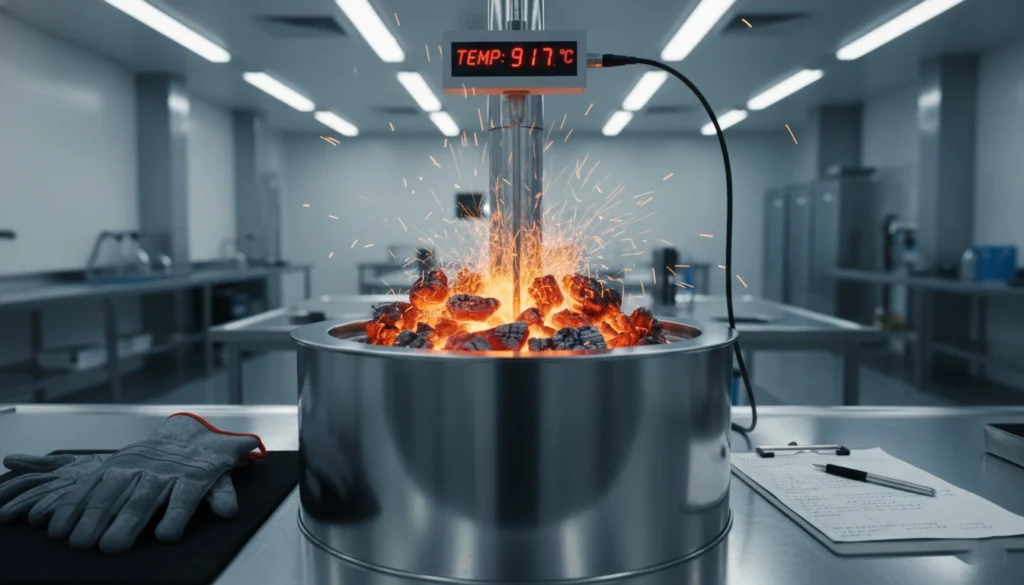
A standardized heat test uses controlled conditions and lab-grade temperature sensors.
Raw Material & Sustainability Comparison
Source Material: Wood vs Coconut Shell Byproduct
- Hardwood charcoal relies on logging — this demands sustainable forestry to avoid deforestation and ensure long-term supply.
- Coconut shell charcoal uses agricultural byproducts (shells) that otherwise might go to waste — making it a more eco-friendly, circular-economy-oriented fuel.
For environmentally conscious businesses, coconut shell charcoal offers a sustainable alternative with lower environmental footprint.
Environmental Impact & Renewability
Turning coconut shells into charcoal adds value to waste material and reduces demand on forests. Meanwhile, hardwood charcoal production requires careful logging, responsible forestry, and often replanting.
Coconut shell charcoal tends to have a smaller environmental footprint per ton of fuel — an increasingly important factor for green businesses or export markets with sustainability requirements.
Production & Processing Complexity
Hardwood Charcoal Methods
- Hardwood logs must be felled, cut, split, dried (seasoned), and carbonized — often in kilns or retorts.
- Moisture content and wood type vary batch to batch.
- Resulting charcoal lumps may vary in size, density, and combustion performance.
This variability demands careful quality control, sorting, and testing — especially for commercial supply.
Coconut Shell Charcoal Methods
- Coconut shells or husks are collected (by-product), cleaned, dried, then carbonized — often in retorts or modern kilns for uniformity.
- Result tends to be more uniform in density, carbon content, and burn behavior.
- Shell-based charcoal is often pre-cleaned from contaminants (sand, husk residues), reducing ash and improving consistency.
This makes coconut shell charcoal relatively easier to standardize and scale, compared to hardwood charcoal with variable wood quality.
Quality Variability & Control
Hardwood charcoal faces variability due to wood species, age, bark content, and moisture. Consistent quality requires sorting, grading, and possibly mixing of logs.
Coconut shell charcoal — when sourced properly — benefits from uniform raw material, easier standardization, and lower batch-to-batch variation.
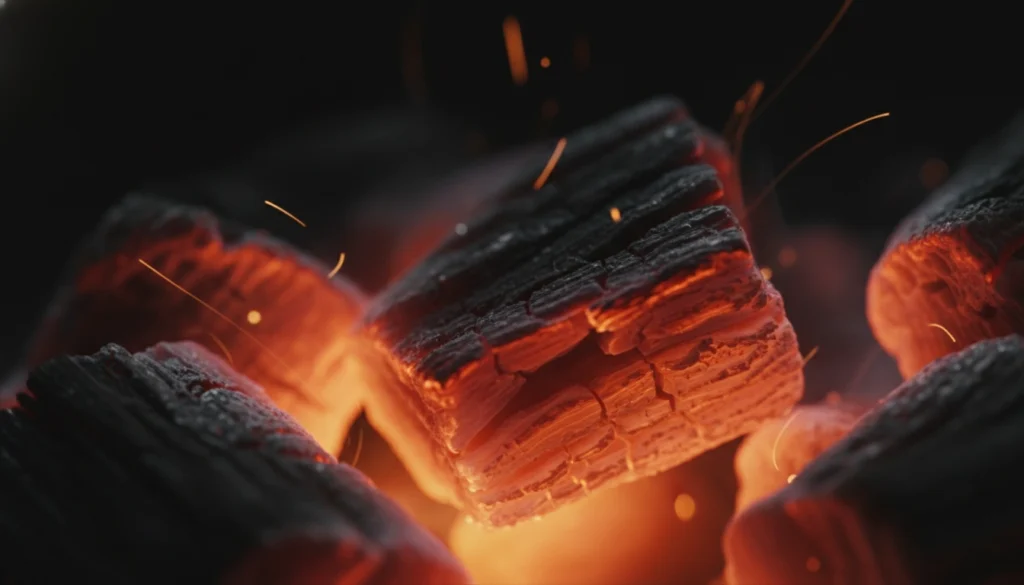
High-density hardwood charcoal glows hotter and longer because of higher fixed carbon.
Cost, Availability & Supply Chain Considerations
- Hardwood charcoal depends on sustainable wood supply and regulated logging. This may increase costs or limit availability depending on region and demand.
- Coconut shell charcoal depends on coconut production — abundant in tropical regions. In areas with coconut agriculture, supply can be stable and cost-efficient.
- Transport and weight — coconut shell charcoal often offers high fixed carbon per weight, making shipping and volume cost-effective.
- For businesses importing large volumes, supply stability, raw material consistency, and predictable cost per ton often favor shell-based charcoal.
Use-Case Comparison: Which Type for Which Business
| Application / Business Need | Recommended Charcoal Type |
|---|---|
| High-heat grilling or metalwork | Hardwood charcoal (dense woods) |
| Clean-burning food or shisha briquettes | Coconut shell charcoal |
| Sustainable, eco-conscious fuel sourcing | Coconut shell charcoal |
| Large-scale export or bulk supply | Coconut shell charcoal (consistent supply) |
| Premium flavor BBQ (wood aroma) | Hardwood charcoal (wood species specific) |
| Consistent industrial fuel or heating | Either — depending on quality control |
Risk Factors & Quality Assurance
When sourcing charcoal — for either type — watch out for:
- Mixed raw materials (softwood, bark, contaminated debris)
- Poor carbonization or uneven burning
- High ash, moisture, foreign matter
- Inconsistent batch quality
- Lack of batch traceability or lab-testing
Always request samples, Certificates of Analysis, and inspect color, density, ash residue, burn behavior before bulk purchase.
How to Choose: Buyer’s Decision Matrix
- Define your primary goal: heat intensity? clean burn? sustainability? price per ton?
- Choose charcoal type that aligns with goal (see table above).
- Request a sample test — burn small batch, check ash, heat, smell, consistency.
- Verify supplier transparency — source, processing method, batch data.
- Scale order when you confirm consistent quality.
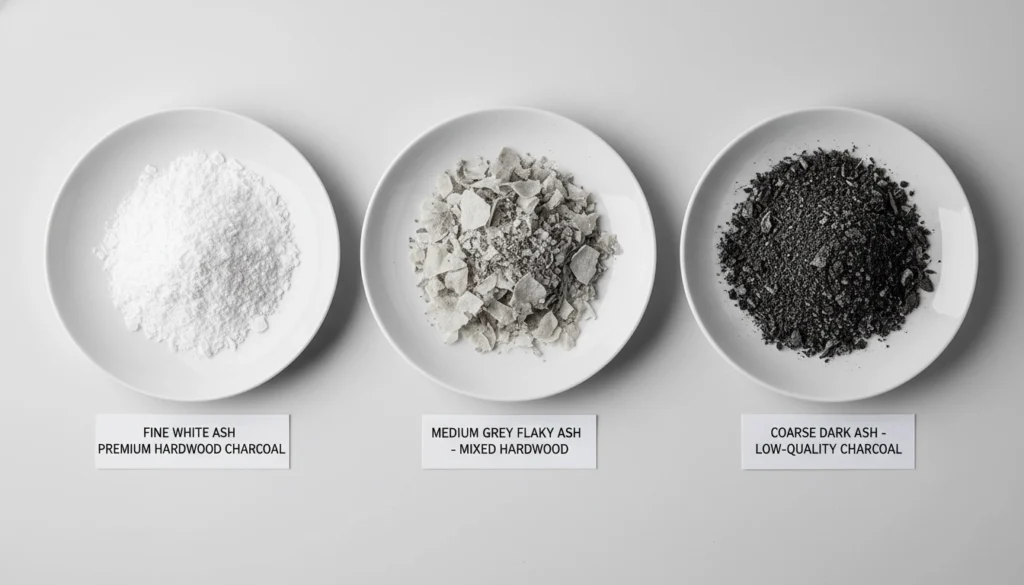
Ash color reveals quality — premium charcoal leaves lighter, finer ash.
FAQ — Common Questions from Buyers
Q: Is coconut shell charcoal always better than hardwood charcoal?
A: Not always. Coconut shell charcoal offers uniformity, clean burn, and sustainability. Hardwood charcoal can produce higher heat and wood-smoke flavor. The best choice depends on your needs.
Q: Which charcoal yields less ash?
A: Properly processed coconut shell charcoal tends to produce less ash than hardwood charcoal because shells are cleaner and more uniform.
Q: Does hardwood charcoal burn hotter?
A: Dense hardwood charcoal can produce strong heat, but results vary depending on wood species and processing. Well-made coconut shell charcoal can perform equally.
Q: Is coconut shell charcoal sustainable?
A: Yes — because it uses agricultural waste (coconut shells) rather than newly cut trees, reducing deforestation impact.
Q: Can mixing different woods or shells degrade performance?
A: Yes. Mixed raw materials increase variability in burn, ash, and heat. Always demand consistency and test batches.
Q: Should I request samples before ordering in bulk?
A: Absolutely. Testing helps you verify heat, ash, burn time, and quality before large investment.
Comparing hardwood vs coconut charcoal reveals both have strengths. Hardwood charcoal offers traditional strength, heat, and wood flavor. Coconut shell charcoal offers consistency, lower ash, and sustainability.
For many businesses — especially those needing stable supply, clean burn, or eco-conscious sourcing — coconut shell charcoal often wins. But if you need very high heat or wood-specific flavor, hardwood charcoal remains valuable.
Ready to test both? Request a free quotation and sample today. Use real-world testing to decide what fuel works best for your business.